Rudolf Walton
Tlingit
(1867-1951)
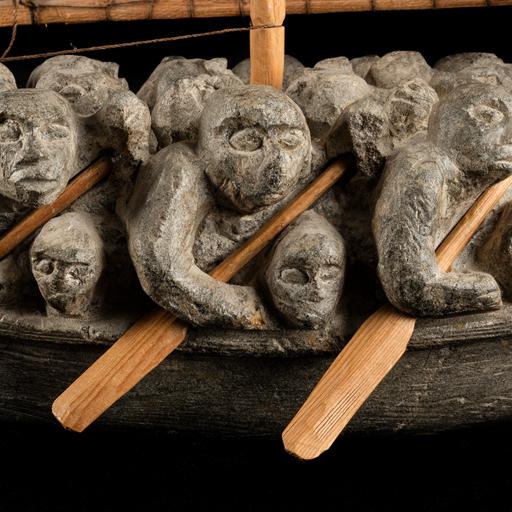
Augustus Bean (1850-1926) and Rudolf Walton (1867-1951) were a Tlingit carving duo from Sitka Alaska. They were active in the late 19th to early 20th centuries. They are best known for their highly detailed style, often using embellishments such as beads, bone, and ivory inlays. This form of embellishment became a signature style for the duo.
Bean and Walton trained at the Sheldon Jackson School (now museum) before opening their store, Walton and Sons, in Sitka, Alaska. Walton owned the shop until 1920, and his records and many artefacts from the shop are currently held in the Sheldon Jackson Museum.
High-ranking members of Sitka families and respected leaders in their community, both Bean and Walton are remembered for their challenges to American legal authorities, contributions to the so-called ‘Last Potlatch’ of 1904, for carving objects for ritual and ceremonial use, and for traditionally informed objects for sale to Euro-American collectors and institutions.[1]
In 1926, Rudolph Walton said of a “Hootz-tsik” or bear feasting bowl: “This is the kind of dish the old hunter used. His name was Kotz. Long time ago he was captured by the Bears and married into the Bear tribe. Later on he had sons and daughters, half men, half bear. This kind of dish he used, a dish in the Bear’s Nest.”[2]
[1] Zachary R. Jones, “Haa Leelk’w Has Ji.Eeti, Our Grandparents’ Art: A Study of Master Tlingit Artists, 1750-1989,” PdD. PdD. Dissertation University of Alaska Fairbanks, 2018. p. 129-135 and 163-171.
[2] Joyce Walton Shales, “Rudolph Walton: One Tlingit Man’s Journey Through Stormy Seas Sitka, Alaska, 1867-1951.” PhD. Thesis, University of British Columbia, 1998. p. 105